

New Zealand's largest stadium demolition: Lancaster Park
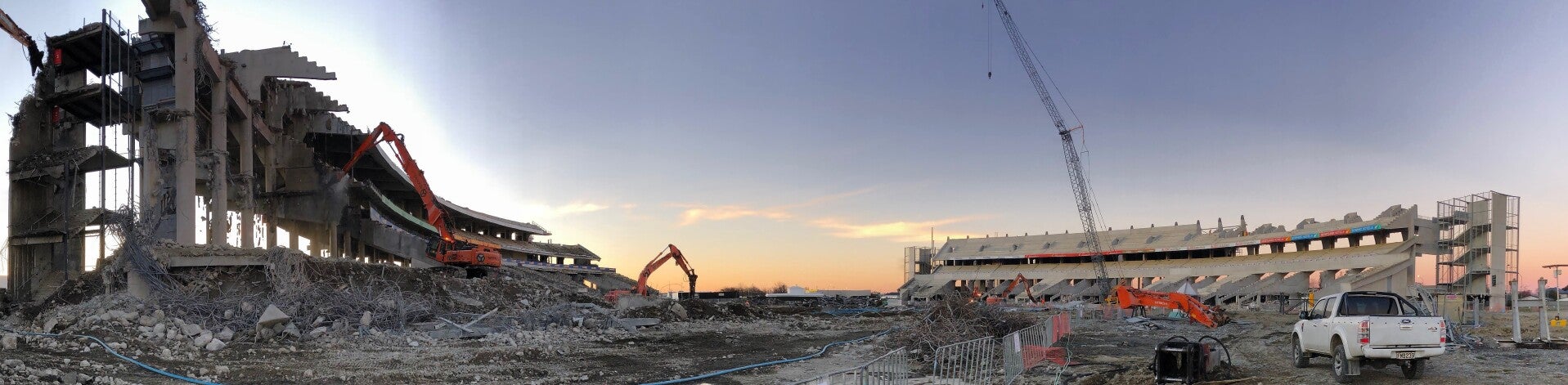
Yakka proudly led the country's largest stadium demolition project at Lancaster Park. We successfully dismantled the iconic Robbie Deans and Paul Kelly stands, which once towered 45 metres above the playing surface, accommodating 40,000 spectators. Our meticulously engineered plan ensured a safe and environmentally sound process, achieving an incredible 99.8% material recycling rate. Approximately 60,000 tonnes of concrete were processed for reuse as subbase in a new Rangiora development, showcasing our commitment to sustainability.
Head contractor excellence: On time, on budget, zero harm
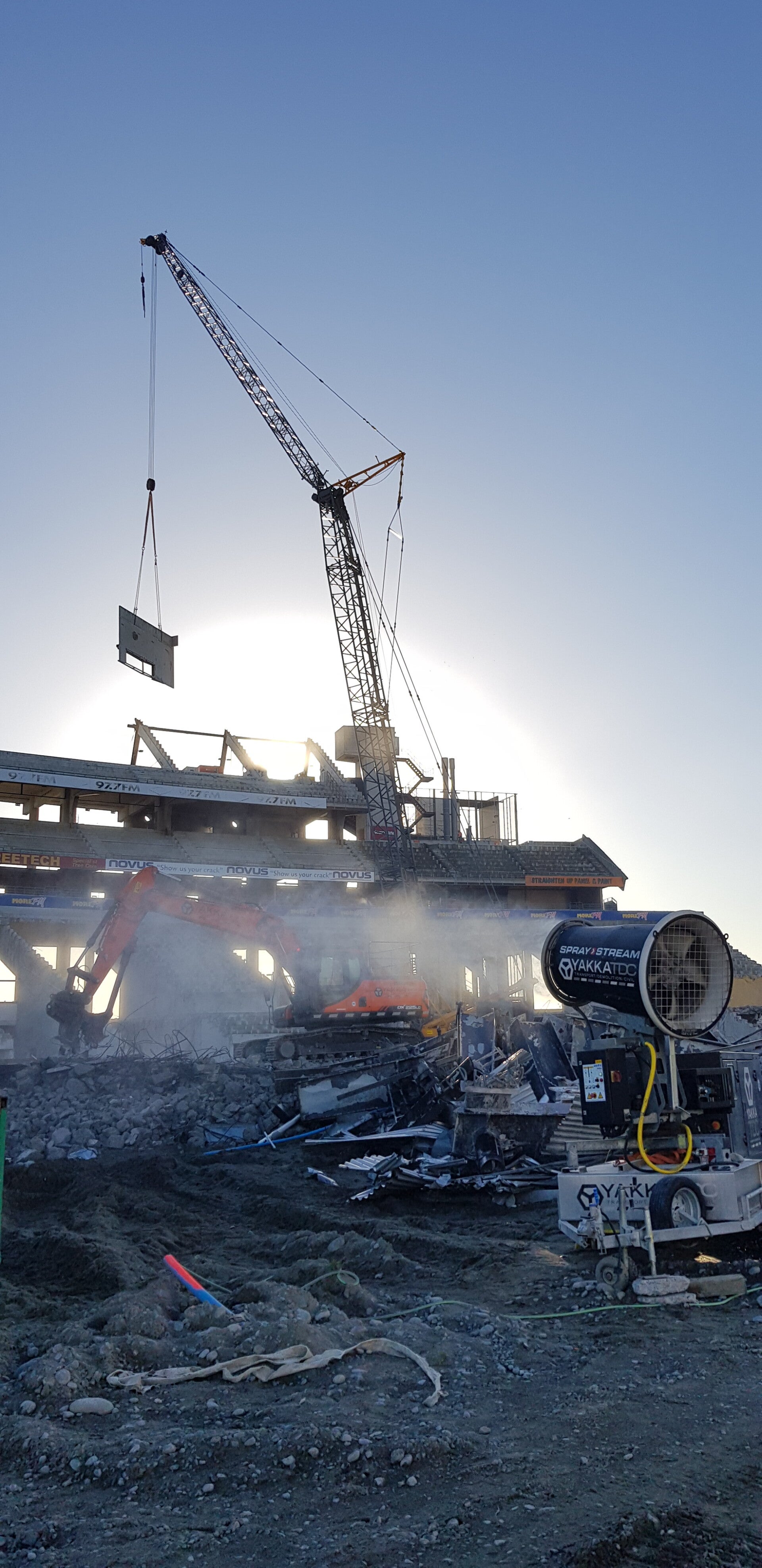
As the appointed Head Contractor for the Lancaster Park Stadium demolition, Yakka took full responsibility for this complex project. Our team delivered the demolition of the main stands precisely on schedule and within the allocated budget, all while maintaining an impeccable record of zero harm incidents. This achievement underscores our rigorous safety protocols and efficient project management capabilities, setting a benchmark for large-scale demolition in New Zealand.
Overcoming height and proximity: Innovative solutions
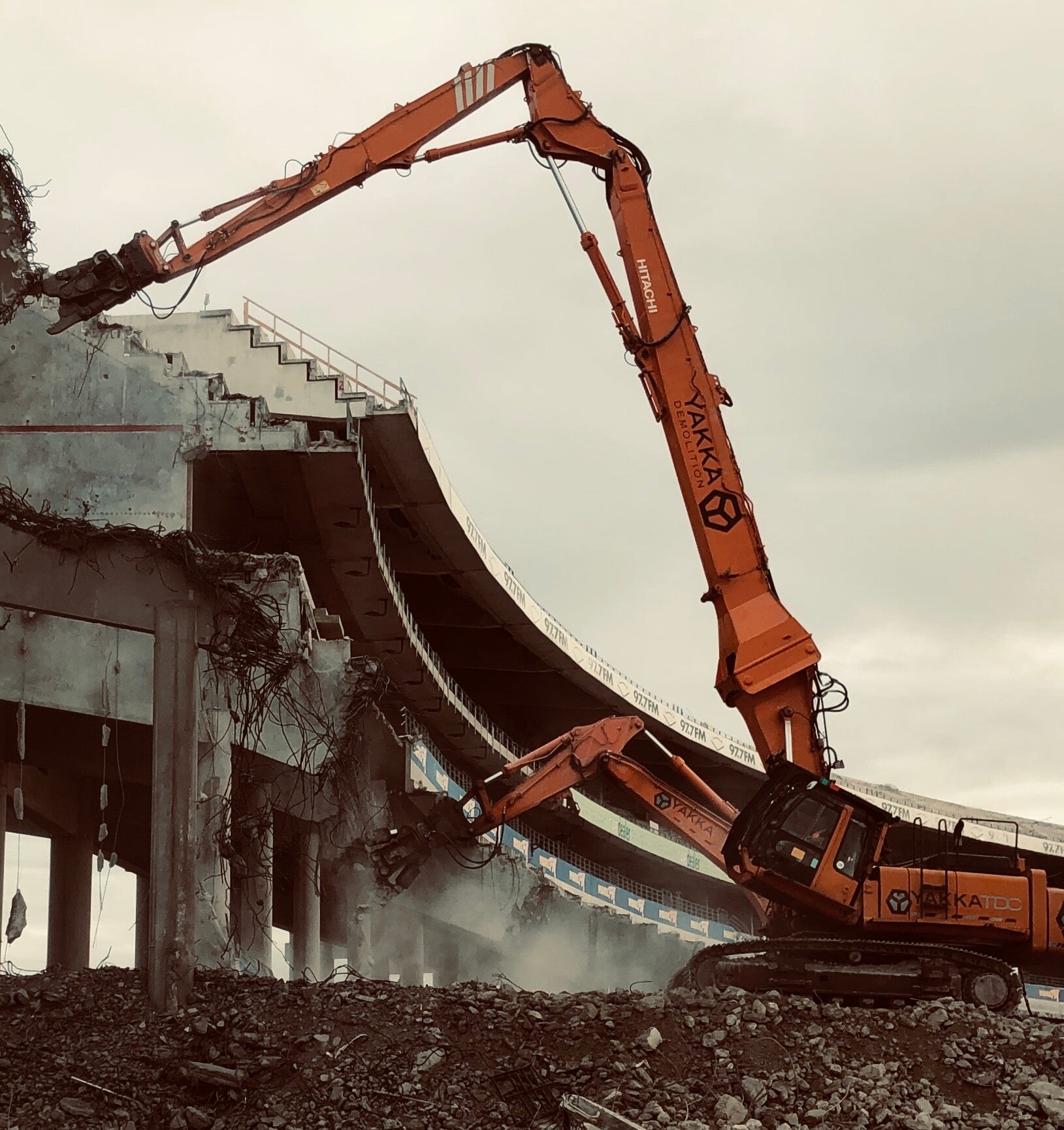
The demolition of Lancaster Park Stadium presented unique challenges, primarily due to the stands' immense height and their close proximity to surrounding properties. We faced stringent vibration limits and the critical need to control dust from structures soaring over 40 metres, preventing it from spreading across the city. Yakka's innovative engineering approach was key to navigating these complexities, ensuring safety and minimal disruption.
Precision demolition and environmental leadership
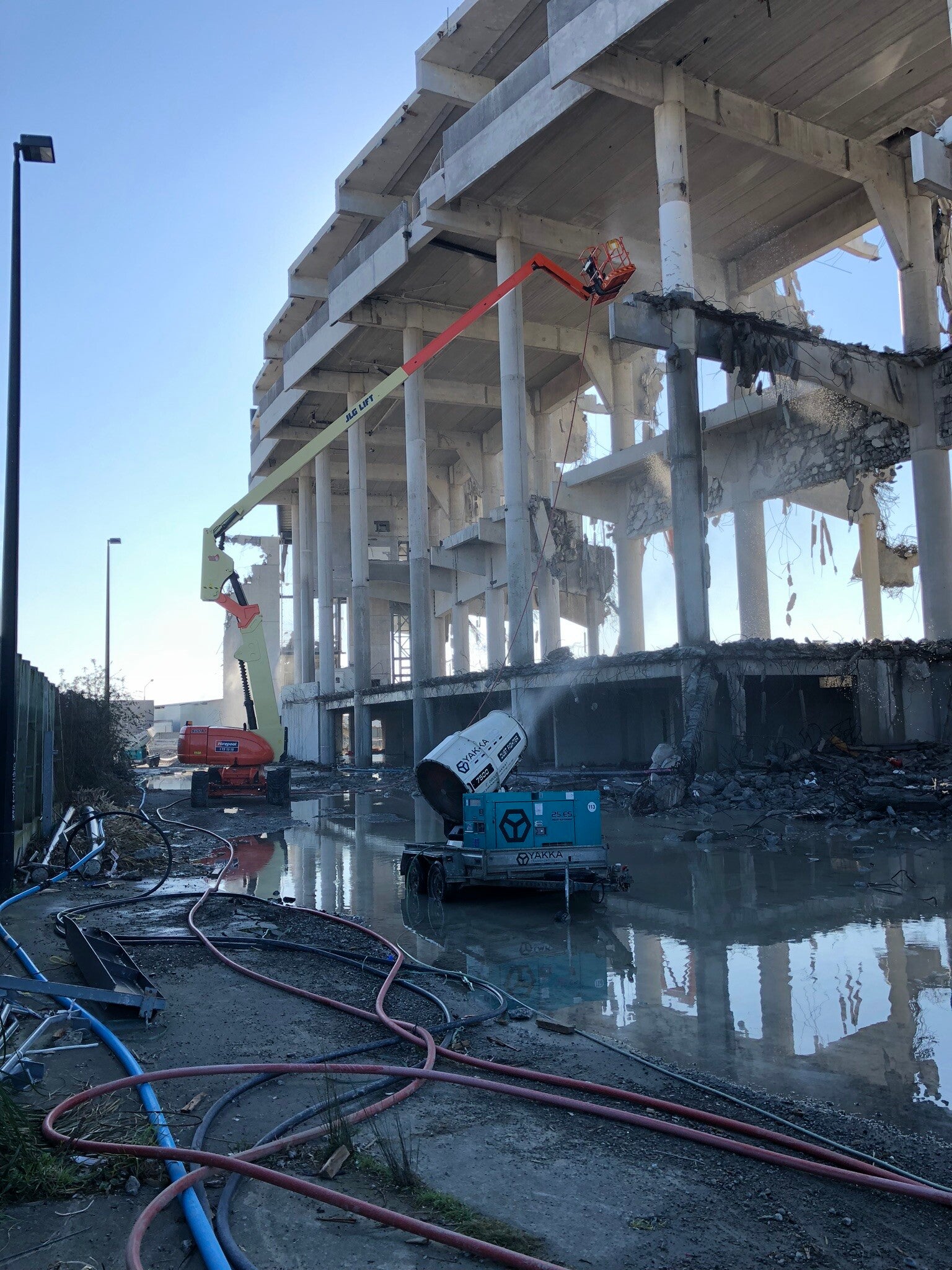
Our team developed a sophisticated 'cut and crane' solution, employing a 250-tonne crawler crane to carefully lower upper-level and roof support structures to the ground after they were propped and wire-sawn. Non-structural bleachers were removed in a staggered sequence to maintain horizontal bracing, followed by the individual demolition of structural beams. To mitigate vibration impacts, 5-metre diameter balls of reinforcing were created from processed concrete and strategically placed in column drop zones. Columns were controlled with 60-tonne high-reach machines, while 50-tonne excavators scarfed lower connections. These 180-tonne structural sections were dropped onto the rebar balls under strict vibration monitoring. Comprehensive dust suppression, utilising fire hose systems on 40-metre high knuckle booms, high-reach excavator dipper arms, and ground-level cannons, ensured minimal environmental impact. Our commitment to sustainability resulted in 99.8% of materials being recycled for future use.